Email Spoofing
 By Malcolm McDonald Founder, Editor-in-ChiefAuthor of Grokking Web Application Security
Email spoofing is the sending of email messages with a forged "from" address.

- Prevalence
- Common
- Exploitability
- Easy
- Impact
- Worrying
What is email spoofing?
Email spoofing is an impersonation attack in which an attacker sends email with a forged "from" address, making the message appear to come from a trusted sender such as your organization. It works because SMTP does not authenticate senders by default, and it is used for phishing and fraud. SPF, DKIM and DMARC let receivers detect forgeries.
What you'll learn
- Why SMTP lets anyone forge the sender of an email
- How spoofed email drives phishing attacks on your users
- How SPF and DKIM let mail providers detect forged messages
This lesson includes
-
Email Spoofing lab
Watch a phishing email with a forged sender lead a user to a fake password reset page that saves their credentials. Then see how SPF and DKIM let mail providers flag forged mail, and edit an email yourself to watch its DKIM signature change.
-
How to prevent Email Spoofing
The prevention guide covers two approaches:
- Implement the Sender Policy Framework (SPF)
- Implement DomainKeys Identified Mail (DKIM)
-
Email Spoofing quiz
Two questions. Passing marks the lesson complete.
Related lessons
Browse all 45 lessons
Open Redirects
Most web-applications make use of redirects. If your site forwards to URLs supplied in a query string, you could be enabling phishing attacks.

DNS Poisoning
If upstream DNS caches have been poisoned, attackers may be intercepting traffic before it even gets to you.

Subdomain Squatting
Attackers will steal dangling subdomains to deliver malware and perform phishing attacks.
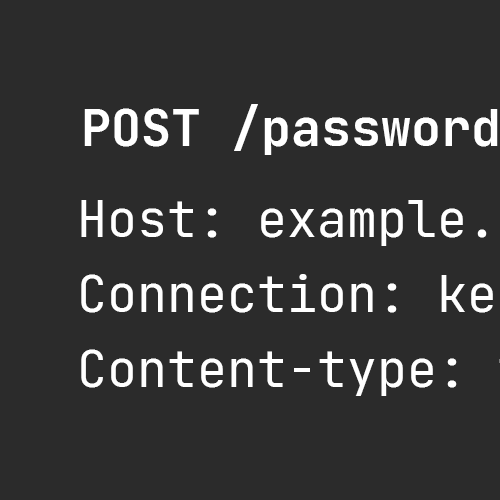
Host Header Poisoning
It's dangerous to rely on the value supplied in the Host header of an HTTP request.